
Conveyor Line Bottlenecks: 6 Planning Checks for Smoother Material Flow
A conveyor can move products reliably and still leave a production line waiting. Cartons may arrive faster than a packing station can handle them, a transfer may interrupt the flow, or a downstream stop may create a queue upstream. The useful starting point is to study the whole process before selecting a conveyor speed or layout.
This guide outlines six planning checks for manufacturers, packaging teams and warehouse operators preparing a conveyor improvement project. Use it to build a clear enquiry for customized conveyor solutions from JBDS Power.
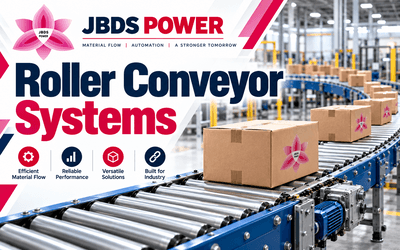
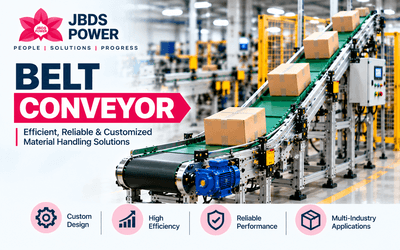
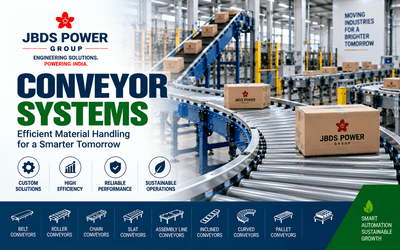
Images are AI-generated concept illustrations with JBDS Power branding, not photographs of completed installations or engineering drawings.
1. Map the Product Journey Before Changing Equipment
Start at the point where a product enters the line and follow it through every movement, wait, inspection and handover. Record where operators handle products manually and where material crosses another route. A simple flow map often makes a recurring queue easier to discuss than a list of equipment specifications.
Include the product range in this exercise. A line that handles one carton smoothly may behave differently with a smaller pack, an unstable container or a heavier assembly. Capture the smallest and largest items, their weight range, base condition, orientation and any handling restrictions.
Where does each product enter and leave the line?
Which steps add work, and which simply hold or transfer material?
Are pedestrian routes and replenishment activities accounted for?

Map the complete product journey and the surrounding access routes.
2. Compare Required Output with Each Process Stage
Define the output you need in a consistent unit, such as accepted cartons per hour. Then compare that target with the observed output of each stage during representative operation. Record changeovers, short stops and waiting time separately so a temporary interruption is not mistaken for a permanent capacity limit.
A faster conveyor alone cannot resolve a station that takes longer to process each item. It may simply deliver a larger queue. Discuss whether the process needs a different workstation arrangement, controlled accumulation, revised release timing or an equipment change.
Share both normal and peak demand with the supplier. Include shift patterns and product mix, and agree how performance will be measured. Avoid relying only on an unloaded demonstration or a headline belt-speed figure.

Compare process capacity and planned accumulation at each stage.
3. Review Every Transfer and Product Support Point
Pay particular attention where products enter, leave or move between conveyors. Record changes in height, direction, support and orientation. Include the smallest product as well as the heaviest: each can create a different handling challenge.
Provide samples or accurate drawings so the engineering team can assess the transfer arrangement. Ask how guides, supports and interfaces will accommodate the full product range and how product changeovers will be handled. The final arrangement should be validated against the actual products and site conditions.
If an existing line repeatedly jams at one location, document what happens immediately before the interruption. Photographs and short operational observations can help explain the issue without assuming that the entire conveyor needs replacement.

Review support and alignment at every product transfer.
4. Agree How the Line Will Respond to Stops
Mechanical layout and control behaviour should be discussed together. Specify what should happen when a downstream machine is unavailable, a product is missing, a queue reaches its agreed limit or an operator requests a stop. Clear operating sequences help everyone evaluate the proposed solution.
Ask which signals will be exchanged with connected equipment and who is responsible for each interface. Record the expected operator messages, permitted restart sequence and access levels for adjustments. Safety functions and protective measures need assessment by the responsible engineering team for the specific machine and installation.
JBDS Power lists PLC and HMI integration among its conveyor capabilities. When discussing your project, provide details of existing controls and explain the information operators need to see during normal running and fault recovery.

Agree control interfaces and operating sequences before implementation.
5. Leave Space for Access, Cleaning and Maintenance
A layout review should include more than the footprint of the conveyor. Consider access to service points, guards, control cabinets and adjacent workstations. Check how technicians will reach components and how replacement parts will be moved into position.
Describe the operating environment in the enquiry: dust, moisture, cleaning routines and other relevant conditions influence the specification. Ask the supplier to explain the proposed maintenance tasks and access requirements. Agree responsibility for site preparation and any changes to surrounding equipment.
Plan maintenance with the equipment supplier and your site team. Inspection, cleaning and repair activities must follow the applicable isolation procedures and approved instructions; this planning guide is not an operating or maintenance procedure.

Include service access and maintenance requirements in the layout.
6. Define Acceptance Checks Before Placing the Order
Turn the project objectives into checks that can be witnessed and recorded. State the product range, operating conditions, agreed throughput measure and acceptable handling outcome. Include interfaces with upstream and downstream equipment, since a conveyor working on its own does not demonstrate the performance of the complete line.
Agree which checks will take place before dispatch and which require the installation site. Use representative products, include planned changeovers and record any outstanding actions. Clarify who supplies test material, who approves the results and what documentation is required for handover.
Product handling across the agreed size and weight range.
Output measured over an agreed trial period and conditions.
Transfer performance and coordination with connected equipment.
Operator training, maintenance instructions and spare-parts information.

Use representative products and agreed criteria for acceptance testing.
What to Send with a Conveyor Improvement Enquiry
Prepare a short brief containing the plant layout, product details, current output, target output, recurring interruptions and available installation window. Add photographs or videos you are authorised to share, plus the details of equipment that must connect to the conveyor. Separate confirmed requirements from items that need a site survey.
This gives the supplier a practical basis for discussion and helps you compare proposals against the same requirements. Ask each proposal to identify assumptions, exclusions, interface responsibilities and the proposed acceptance approach.
Discuss Your Conveyor Project with JBDS Power
JBDS Power offers customized conveyor systems for industrial material handling. Explore our conveyor customization services, or contact JBDS Power with your product and process details to discuss the next step.