
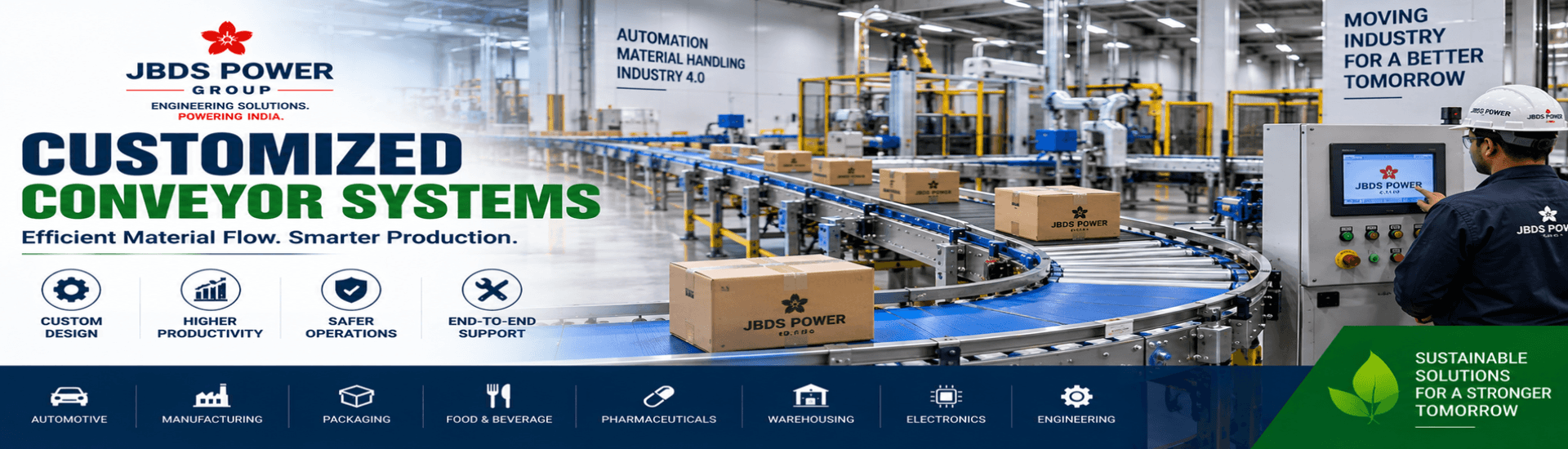
What is a Customized Conveyor System?
A customized conveyor system is a material-handling solution designed specifically around a particular production process rather than forcing the production process to adapt to a standard conveyor.
During conveyor design, engineers may consider factors such as:
Product dimensions and weight
Material type
Required conveyor length and width
Production cycle time
Transfer height
Plant layout
Loading and unloading points
Required conveyor speed
Automation requirements
Safety requirements
Future production expansion
This approach allows the conveyor to become an integrated part of the manufacturing process.
Why Are Conveyor Systems Important in Manufacturing?
In many factories, material must continuously move between machining, assembly, inspection, testing, packaging and dispatch operations.
Manual movement can increase handling time and make production flow dependent on manpower.
A properly engineered conveyor can help establish a more predictable movement sequence:
INPUT → TRANSFER → PROCESS → INSPECTION → ASSEMBLY → PACKING → OUTPUT
Depending on the application, conveyor automation can help improve productivity, reduce manual handling, optimize floor-space utilization and provide more consistent workflow management. JBDS Power's current conveyor solutions are designed around these objectives.
Types of Conveyor Systems
JBDS Power's current manufacturing scope includes belt, roller, chain, slat, assembly-line, inclined, curved, pallet, overhead, packing-line and automated conveyor systems
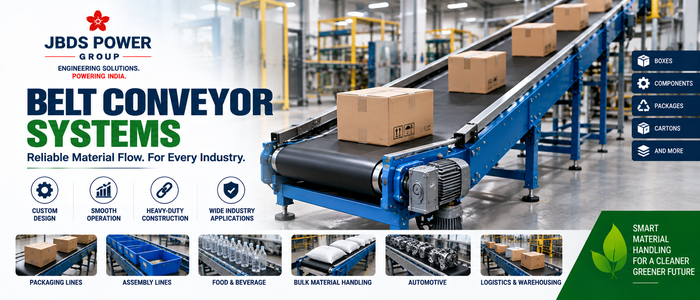
1. Belt Conveyor Systems
Belt conveyors use a continuous belt to move materials from one point to another.
They can be suitable for handling:
Boxes | Components | Packages | Cartons | Parts | Lightweight Materials
Depending on the requirement, conveyor width, belt material, speed, height and supporting structure can be customized.
2. Roller Conveyor Systems
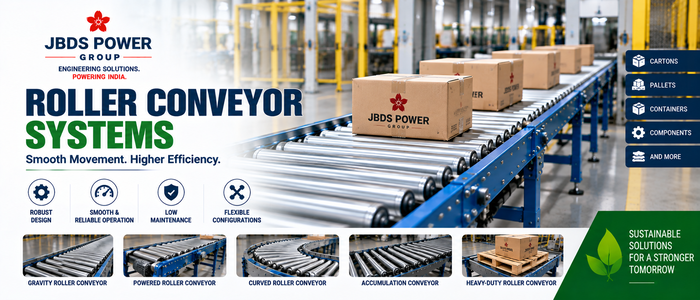
Roller conveyors use a series of rollers to transport products.
They can be designed as:
Gravity Roller Conveyor
or
Powered Roller Conveyor
Roller conveyors are commonly considered where cartons, pallets, containers or products with relatively stable bottom surfaces need to move through a production or logistics process.
3. Chain Conveyor Systems
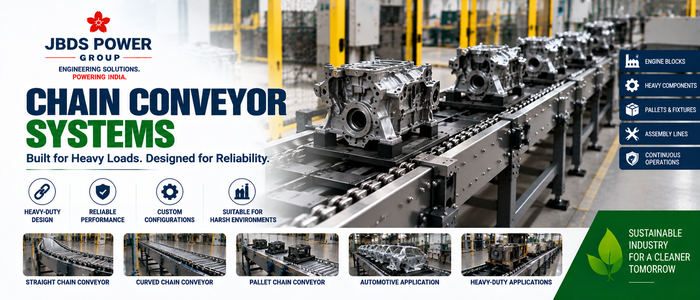
Chain conveyors use chains as the primary material-transfer mechanism.
They can be useful for applications involving heavier loads or where conventional belt transportation may not be suitable.
The chain configuration, drive system, frame and load capacity should be selected according to the product and operating conditions.
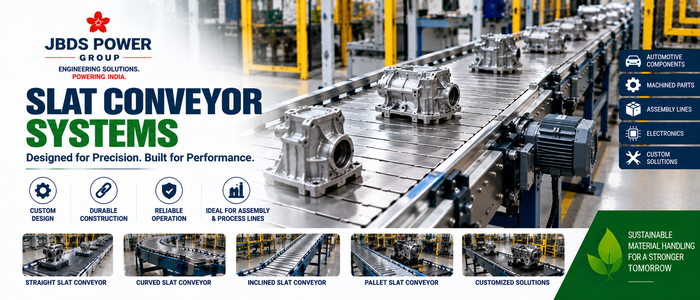
4. Slat Conveyor Systems
Slat conveyors use connected slats or plates to create the conveying surface.
They are commonly considered for manufacturing and assembly applications where the product needs a relatively rigid supporting surface.
Depending on the process, fixtures or workpiece holders can also be incorporated into the conveyor design.
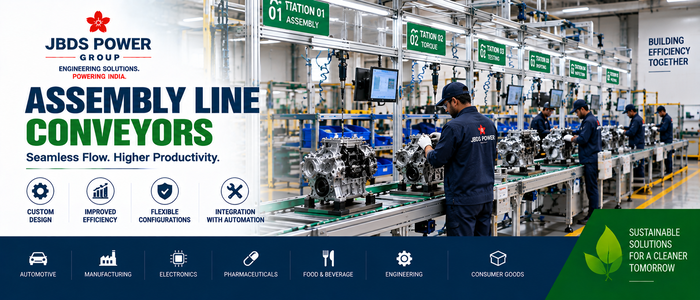
5. Assembly Line Conveyors
Assembly-line conveyors are designed around the manufacturing sequence.
For example:
Station 01 → Station 02 → Inspection → Assembly → Testing → Final Inspection
Workstations, sensors, fixtures, lighting, tools and automation can be integrated around the conveyor.
This can create a complete production line rather than simply a material-moving system.
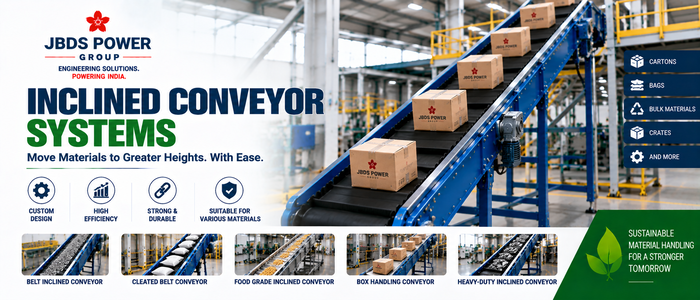
6. Inclined Conveyor Systems
Sometimes material must move between two different elevations.
An inclined conveyor can transport material upward or downward while reducing the requirement for repeated manual lifting.
The incline angle, belt design and product-retention method need to be selected according to the material being transported.
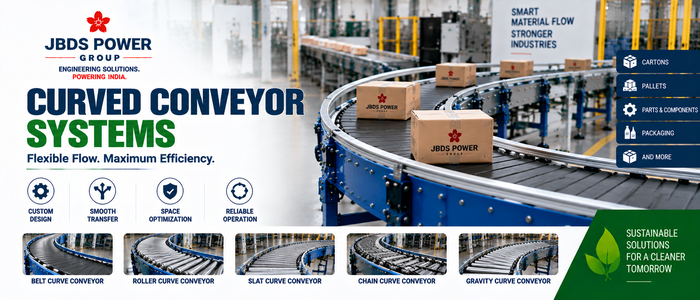
7. Curved Conveyor Systems
Not every factory has enough space for a completely straight production line.
Curved conveyors can help redirect material flow while adapting the system to existing plant layouts.
They can be especially useful when the conveyor needs to move around machinery, structural columns or other production areas.
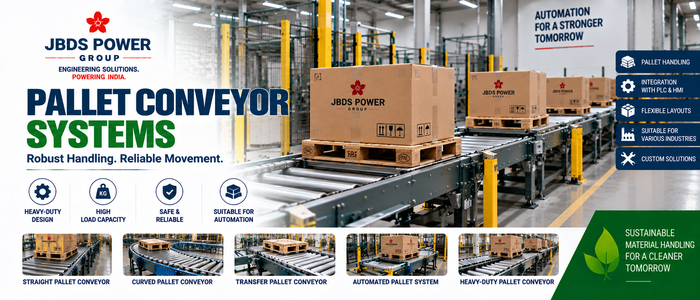
8. Pallet Conveyor Systems
Pallet conveyor systems are designed for palletized products or workpiece carriers.
Depending on the project, these systems can form part of:
Manufacturing Lines | Assembly Operations | Warehousing | Material Transfer | Automated Production
Key Features of a Customized Conveyor System
A properly engineered industrial conveyor can incorporate different mechanical, electrical and automation features depending on the application.
These can include:
Custom Mechanical Design
Designed according to plant layout and product requirements.PLC & HMI Integration
Provides automated sequencing, monitoring and operator control.Variable Speed Control
Allows conveyor speed to be matched with production requirements.Heavy-Duty Construction
Structure and components can be selected according to load and operating conditions.Safety Sensors & Interlocks
Can help coordinate safe machine and conveyor operation.Modular Construction
Allows the system to be designed with future modifications or expansion in mind.Production-Line Integration
Conveyors can interface with other machines, workstations and automation systems.
These capabilities align with the features currently offered on JBDS Power's conveyor manufacturing page.
Benefits of Conveyor Customization
The biggest advantage of customization is that the conveyor can be engineered around the process instead of changing the process to accommodate a standard conveyor.
Potential benefits include:
Improved Production Flow
Material can move between operations according to a defined production sequence.
Reduced Manual Handling
Automation can reduce repetitive manual transportation between production stages.
Better Space Utilization
Straight, curved, inclined and overhead configurations allow engineers to make better use of available plant space.
Consistent Material Movement
Controlled conveyor speeds can provide more predictable transfer between processes.
Production Scalability
A modular conveyor can make future expansion easier when production requirements increase.
Improved Safety
Correct guarding, sensors and interlocks can help reduce risks associated with material movement.
Reduced Product Handling
Fewer manual transfers can also help reduce unnecessary handling of components and finished products.
JBDS Power lists improved efficiency, reduced manual labour, lower handling time, better space utilization, workplace safety and consistent workflow among the advantages of its customized conveyor solutions.
Industries Using Customized Conveyor Systems
Customized conveyors can support a broad range of manufacturing and logistics environments.
JBDS Power currently identifies applications across:
Automotive Industry
Manufacturing Plants
FMCG
Food Processing
Packaging
Pharmaceuticals
Logistics & Warehousing
Electrical & Electronics
Engineering Industries
E-Commerce Fulfilment
The actual conveyor configuration should be selected according to the material and process rather than industry name alone.
How to Select the Right Conveyor System
This section is particularly important for customers planning a new conveyor project.
Before selecting a conveyor, consider the following engineering parameters.
Product Characteristics
What is being transported?
Determine the product's:
Length × Width × Height × Weight
Also consider its shape, surface and stability during movement.
Conveyor Capacity
How many products need to move per minute or per hour?
The conveyor should support the required production cycle.
Load
Both individual product weight and total conveyor loading need to be considered.
Conveyor Dimensions
Determine:
Length | Width | Height | Transfer Height
according to the plant and production process.
Conveyor Speed
The correct speed depends on production output and upstream/downstream processes.
Plant Layout
Available floor area, columns, machines, pathways and operator movement can influence whether a straight, curved, inclined or overhead configuration is appropriate.
Automation Requirement
Determine whether the system requires:
PLC | HMI | VFD | Sensors | Counters | Interlocks | Machine Communication
Safety
Emergency stops, guarding, sensors and operational interlocks should be considered during engineering.
Future Expansion
If production is expected to grow, designing the system with modularity in mind can reduce future modification challenges.
Conveyor Automation And Industry 4.0
Modern conveyors are increasingly becoming part of connected manufacturing systems.
Instead of simply switching the conveyor ON and OFF, the automation system can coordinate material flow with other production equipment.
For example:
Product Detected
↓
Sensor Sends Signal
↓
PLC Processes Logic
↓
Conveyor Starts / Stops
↓
Product Reaches Workstation
↓
Machine Operation Begins
↓
Process Completed
↓
Conveyor Transfers Product to Next Station
Depending on the project, production data, alarms, machine status and operating parameters can also be presented through an HMI or connected control architecture.
JBDS Power Conveyor Design & Manufacturing Process
JBDS Power follows a project-based approach rather than simply selecting a conveyor from a catalogue.
The existing conveyor project workflow consists of:
1. Site Survey & Requirement Analysis
Understand material flow, plant layout and production requirements.
2 .Conveyor Design & Engineering
Develop the mechanical and automation concept.
3 . Manufacturing & Fabrication
Manufacture the conveyor structure and associated components.
4 . Automation & Control Integration
Integrate PLC, HMI, drives, sensors and controls where required.
5 .Installation & Commissioning
Install the conveyor at the customer site.
6 .Testing & Performance Validation
Verify conveyor movement and system performance.
7 . After-Sales Support & Maintenance
Provide ongoing technical support after commissioning.
Why Choose JBDS Power for Customized Conveyor Systems?
JBDS Power combines mechanical engineering, fabrication and industrial automation capabilities to develop conveyor solutions according to customer-specific production requirements.
The company's current conveyor capabilities include in-house design and manufacturing, customized solutions, PLC/HMI integration, automation expertise, PAN-India installation support and technical support.
Instead of treating the conveyor as an isolated piece of equipment, the objective is to integrate material movement with the overall production process.
Need a Customized Conveyor for Your Factory?
Planning a new production line, assembly line, material-handling system or automation project?
Share the following details with our engineering team:
Product / Material → Dimensions → Weight → Required Capacity → Conveyor Length → Plant Layout → Automation Requirement
Our team can evaluate the requirement and develop a customized conveyor solution for your application.
JBDS POWER PROJECT INTERNATIONAL PVT. LTD.
📞 +91 7290054361
📧 project@jbdspower.com
📍 Plot No. 302, Sector 7, IMT Manesar, Gurugram, Haryana – 122052
View JBDS Power Customized Conveyor Solutions
JBDS Power — Customized Material Handling. Smarter Production.