
Bollard Maintenance Planning: 6 Checks for Facility Teams
Bollards form part of the everyday entrance arrangement at factories, commercial buildings and parking areas. After installation, facility teams need a clear plan for observations, reporting, servicing and records. A practical maintenance plan begins with knowing what is installed and who is responsible for each activity.
This guide outlines six planning checks for facility managers and site teams. It supports conversations with your equipment supplier; technical work should follow the instructions for the specific installation. Explore JBDS Power’s bollard solutions to learn about the available product range.
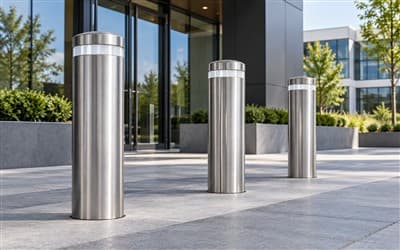
Images are AI-generated concepts with JBDS Power branding, rather than photographs of completed installations.
1. Build an Asset Register for Every Entrance
Start with a record of what is installed and where. Identify fixed, removable and automatic bollards separately, then record the manufacturer, model, installation date and available instructions. Give each entrance a clear reference that both the facility team and service provider can recognise.
Attach the installation drawings, handover documents and previous service records where available. For automatic systems, include the relevant control equipment and access devices in the register. Store sensitive settings and access information using the site’s approved arrangements.
A complete register helps the team ask the right questions when a problem occurs. It also makes it easier to identify gaps in documentation before responsibility changes or a service visit is booked.

2. Define Routine Visual Checks and Escalation
Agree what the facility team should observe during its authorised routine checks. Examples include visible damage, changed alignment, loose-looking components, damaged markings and unusual conditions around the entrance. Record the location, date and observation without assuming the cause.
Use a simple reporting process with a named person responsible for follow-up. Photographs can help describe a concern, provided the site permits them. Make the difference between an observation and a completed repair clear in the record.
Following a vehicle strike or other significant damage, use the site’s incident procedure and seek competent assessment. An apparently upright bollard should not be treated as proof that the complete installation retains its intended performance.

3. Include Surrounding Paving and Drainage in the Plan
Look beyond the bollard itself when planning inspections. Note the condition of surrounding paving, visible drainage features and the routes used by pedestrians and vehicles. Report standing water, accumulated debris or surface changes through the site’s normal process.
Follow the equipment supplier’s instructions for cleaning and environmental care. Avoid choosing cleaning chemicals or methods solely from the appearance of the finish. Materials, coatings and operating arrangements can require different treatment.
For powered systems, any work around moving mechanisms or below-ground equipment belongs within the approved service and isolation procedures. Facility housekeeping and technical servicing should have clearly assigned responsibilities.

4. Review Access Controls and Operating Arrangements
Confirm who is authorised to operate each controlled entrance and how access requests are handled. Review the instructions available to security staff, reception teams and other operators. Include temporary staff and shift changes in the communication plan.
Ask the responsible supplier or engineering team to define the checks required for readers, indicators and associated control equipment. Any demonstrations should follow approved instructions and keep people and vehicles outside the operating zone. Do not improvise tests or bypass protective devices.
Maintain an agreed process for reporting faults and managing access during an outage. The appropriate response depends on the installation and the site’s arrangements; record it in the operating instructions rather than relying on informal knowledge.

5. Agree Service Scope, Timing and Support Contacts
Use the manufacturer’s instructions and site conditions to agree a maintenance programme with a competent service provider. Avoid adopting one generic interval for every bollard type or location. Operating frequency, exposure and installation details need to be considered by the responsible team.
Clarify what each planned visit includes, what the facility must prepare and how service findings will be documented. Ask about parts identification, expected response arrangements and the process for approving additional work. Record the agreed scope instead of assuming all repairs are included.
Keep current support contacts accessible to authorised staff. When requesting assistance, share the entrance reference, equipment details and a clear description of the issue. This provides a practical starting point for the service discussion.

6. Keep Service Records Ready for Handover
Record inspections, reported concerns, service visits and completed actions in a consistent format. Identify who did the work and reference the supporting report. Keep unresolved items visible with an owner and next action.
Review recurring observations with the service provider rather than repeatedly closing them without explanation. A useful record shows what was found, what was done and what still needs assessment. It can also highlight documentation or training that needs updating.
When facility responsibility changes, hand over the asset register, approved instructions, service history and current support arrangements. Confirm the new team knows how to report a concern and where to find the site’s operating procedures.

What to Share When Discussing Your Bollard Site
Prepare the site layout, bollard types, equipment identification, available instructions and recent service history. Explain how the entrance is used and describe any concern clearly. Separate confirmed facts from questions that require a site assessment.
These details help the supplier understand the installation and discuss the appropriate next step. Keep any proposed changes to controls, hardware or operating arrangements within the site’s normal review process.
Discuss Your Requirements with JBDS Power
JBDS Power offers fixed, removable and automatic bollard solutions for industrial and commercial applications. Visit our bollard manufacturer page or contact JBDS Power with your site requirements to discuss product options and support arrangements.