
Belt vs Roller Conveyors: Which Fits Your Production Line?
A carton travels neatly along a roller conveyor. A soft pouch with the same weight may behave very differently. That is why the first question in conveyor selection should be about the product and the work it needs to do.
Both belt and roller conveyors can be useful in manufacturing, packing and dispatch. Choosing between them becomes easier when you look at the underside of the load, its route through the factory and what happens when the next machine pauses.
This guide compares belt vs roller conveyors from a buyer's point of view. It will help you prepare a clearer enquiry and decide what to demonstrate with real product samples.
1. Understand what supports the product
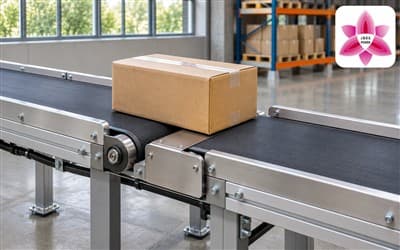
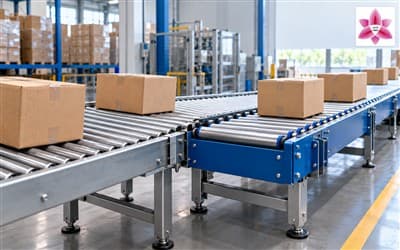
A belt conveyor carries the product on a moving belt surface. On a roller conveyor, the load rests across a series of rollers. The important difference for this comparison is the surface touching the product.
Continuous belt support can be helpful for small items or flexible packs that need support between contact points. Roller conveyors are commonly considered for cartons, totes and other loads with a suitable, stable base. Neither description settles the design on its own; dimensions, weight and the required movement still matter.
Starting question | Belt conveyor discussion | Roller conveyor discussion |
|---|---|---|
How is the base supported? | A continuous belt surface | Contact across individual rollers |
What samples should be checked? | Small, flexible and variable packs | Cartons, totes and base variations |
What happens when flow stops? | Agree stopping and product behaviour | Agree the roller drive and accumulation arrangement |

2. Turn the product over before comparing quotations
A flat photograph from above can hide the details that matter underneath. Look for feet, ribs, seams, straps, soft packaging or a base that changes shape when loaded. Send photos of the underside as well as the usual product dimensions.
For example, a plastic tote may look rectangular while resting on narrow moulded feet. A carton that sits flat when empty may change shape with its normal contents. Include those everyday conditions in the sample set.
For a roller proposal, ask how the roller spacing and arrangement will support your shortest product in its intended orientation. For a belt proposal, discuss the belt surface and how the pack behaves during starting, stopping and transfer. Let the supplier assess these details with representative samples.

3. Describe the flow you need between machines
Transporting a product from one bench to another is a different job from feeding a machine at a controlled interval. Explain whether items need to stay separated, wait in a queue, stop at a station or move continuously.
A roller conveyor can be gravity-fed or powered. Powered roller systems can also be designed with controlled zones, but that function must be specified. A basic roller section should not be assumed to provide controlled accumulation simply because it has rollers.
Likewise, a moving belt does not automatically solve every spacing or stopping requirement. Agree the controls and what happens when downstream equipment is unavailable. Our gravity vs powered roller conveyor guide explains the next comparison if rollers look suitable.

4. Walk the route, including every handoff
Sketch the proposed route and mark the infeed height, discharge height, turns and changes in elevation. Add the equipment on either side. A straight section that works well on its own may still have a difficult handoff at the end.
For an incline, ask the designer to review product grip, orientation and the proposed conveying surface. Depending on the application, a belt design may include features such as cleats or guides. The suitability of the arrangement needs to be checked with the actual load and route.
Pay particular attention to the smallest pack at each transfer. Our guide to planning conveyor transfer points covers the observations worth bringing to that discussion.

5. Include the working environment and service routine
Tell the supplier what the conveyor will encounter during a normal shift. That might include dust, oil, moisture, packaging debris or a particular cleaning method. These details help define the materials, components and access arrangements needed for the application.
A shiny frame or a particular belt colour does not establish suitability for your cleaning process. Share the cleaning requirements directly and ask the supplier to confirm the proposed construction and component selection.
Bring the maintenance team into the layout review. Ask how routine inspection and servicing will be carried out, what access space is required and which replacement items should be identified at handover. Compare the complete proposed systems, including controls and service support, when assessing the quotation.

6. Make the product trial answer a real question
Prepare samples that represent the range you expect to run, including the lightest, heaviest and least stable packs. Use normal contents and packaging where possible. Tell the supplier which orientations are permitted and which product surfaces must remain undamaged.
Agree what the trial should demonstrate. Useful observations include whether products remain stable, pass between sections cleanly and respond as expected when the line stops and restarts. Record the proposed speed, product spacing and test conditions alongside the result.
The best answer may use different conveying methods in different parts of the line. For example, individual packs and the cartons they are later packed into can present different handling requirements. Ask the designer to explain the reasoning for each section.

Discuss your conveyor requirement with JBDS Power
Bring your product samples, dimensions, weights, layout and required flow to the first conversation. The conveyor specification checklist can help organise that information.
Explore JBDS Power customised conveyor solutions or contact our team about your production line. A clear description of the product and the daily workflow gives the selection discussion a practical starting point.
Images illustrate typical conveyor selection and trial scenarios.